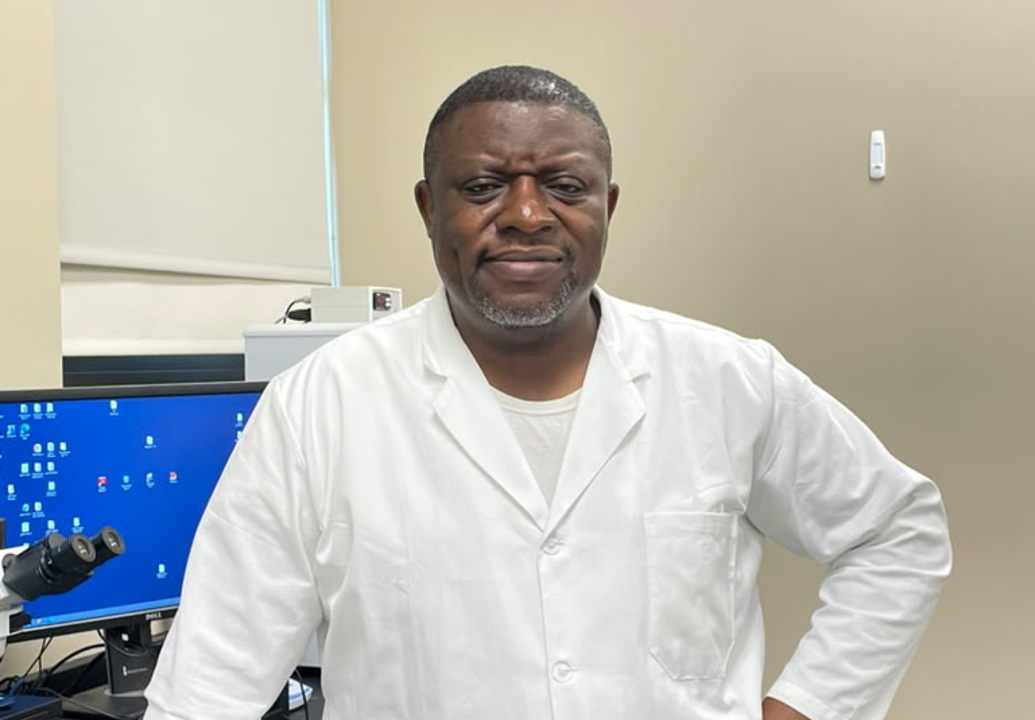
Dr. Jean Magloire Feugang is an associate research professor in Mississippi State University’s Department of Animal and Dairy Sciences. His research combines reproductive biology, animal science, and non- to less-invasive biophotonics methods, including nanotechnology and spectroscopy, to improve reproductive success in livestock.
Early in his academic training, Feugang recognized that traditional methods for evaluating reproductive health were often invasive, time-consuming, or unable to capture physiological changes as they occurred. That realization helped shape his research, which focuses on developing advanced technologies and targeted nutritional strategies to better understand and improve animal reproduction.
Feugang describes his work using a simple analogy: evaluating the quality of a seed before planting it—without damaging the seed itself. He applies a similar approach to reproductive cells, including sperm, oocytes, and embryos, using several techniques:
- Non-Invasive Diagnosis: Advanced light-based technologies allow researchers to evaluate the quality and health of animal semen and reproductive tissues safely and in real time.
- Nanotechnology and Bio-Imaging: Biological markers and high-resolution imaging help researchers observe cellular processes, track sperm movement, and assess fertilization potential.
- Nutritional Interventions: Specific natural supplements are tested in livestock diets to determine whether they can enhance male fertility, help sperm withstand cold storage during artificial insemination, and improve overall sire reproductive performance.
Feugang’s recent research has produced promising findings. His work demonstrates that non-invasive imaging and sensing technologies can detect subtle physiological and metabolic changes in reproductive cells and tissues before symptoms or structural abnormalities become apparent through traditional methods.
His research also shows that targeted dietary supplementation, including antioxidants and amino acids, can influence the proteins, metabolites, and microbiota present in semen. These changes may help preserve sperm motility and integrity during extended liquid storage—an important consideration for artificial insemination and livestock production.
Advances in optical sensors, molecular markers and nutritional biochemistry are allowing researchers, like Feugang, to explore questions about animal reproduction that could not have been answered a decade ago. Feugang said he is motivated by the continuing evolution of technology, which provides new opportunities for discovery. The broader impact of his research—supporting agricultural communities and strengthening food security—continues to drive his work.